
1. Introduction
On 8 October 2025, the Ministry of Interior issued Circular No. 10/2025,[1] emphasizing the respect for citizens’ rights and the treatment of lawyers in a manner commensurate with their role, while calling for cooperation with them during the discharge of their legal representation duties for their clients. In terms of its language, the Circular appeared to be a step aimed at strengthening defense safeguards, improving the relationship with Law Enforcement Agencies (Judicial Police), and entrenching the values of justice.
However, Article 3 of the Circular permitted the presence of legal counsel during the session to record the client’s statement solely in the capacity of a “listener,” without any intervention in the investigative proceedings. Furthermore, the decision allowed for the continuation of investigations thereafter in the lawyer’s absence. While the restriction or exclusion of the right to defense is not a novel practice, the Circular, in its current form, has conferred an organized administrative character upon these practices. This has contributed to the granting of nominal legitimacy to violations that were already extant under the previous regime, thereby contradicting the principles set forth in the Circular’s preamble.
This report aims to analyze the practical impact of this restriction on the right to defense by approaching it in light of national laws, constitutional standards, and international fair trial standards. The report also reviews how the Circular is applied on the ground, based on documented testimonies from lawyers directly affected by its implementation. The objective is to evaluate whether the regulation established by the Circular has actually contributed to strengthening defense safeguards or has instead institutionalized a nominal presence for the lawyer, thereby stripping this right of its legal substance.
To prepare this report, Syrians for Truth and Justice (STJ) conducted five in-depth interviews with lawyers directly affected by the implementation of the aforementioned Circular. Informed consent was obtained from the participants after clarifying the voluntary nature of their participation and the methods for using the information provided, including the use of excerpts from their testimonies in this report. All witnesses emphasized their desire to remain anonymous and requested that any identifying information be withheld for fear of reprisals against them or their family members. Accordingly, this legal paper adopts pseudonyms when referring to the testimonies included herein.
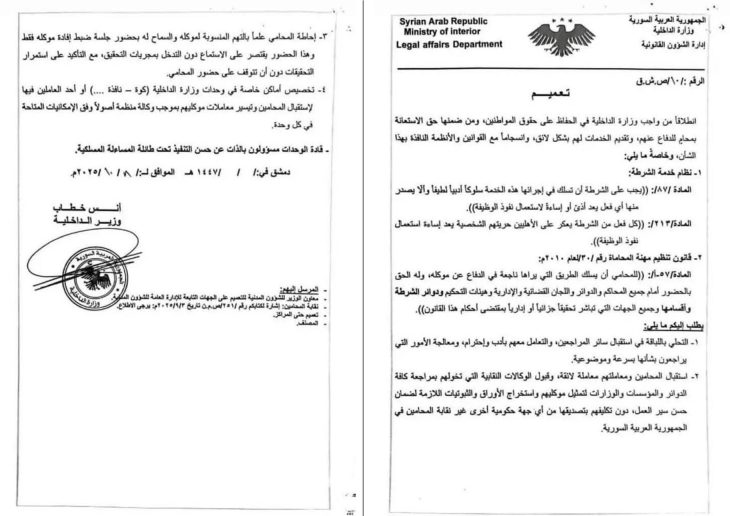
Figure 1: A copy of Circular No. 10/2025 issued by the Ministry of Interior, dated 8 October 2025.
2. The Importance of Lawyer Presence During Interrogation and the Legal Framework for the Right to Defense
The role of a lawyer during the investigation phase is not merely to ensure procedural formality. Rather, their presence during the initial stages of interrogation constitutes one of the most critical practical safeguards for the rights of detainees. At this stage, the detained person is in a vulnerable position regarding legal knowledge and the capacity to object. Ensuring the lawyer’s right to speak and object serves as a preventive intervention that limits the possibilities of coercion, ill-treatment, and the extraction of statements under pressure; it also contributes to ensuring the integrity of proceedings from their inception.
The United Nations Human Rights Committee emphasizes that any flaw occurring during the preliminary investigation phase cannot always be corrected later before the judiciary, even with the presence of a lawyer at advanced stages. This is because subsequent decisions—including the filing of charges and the characterization of facts—are often built upon the initial statements recorded in the absence of the defense. Consequently, reducing the lawyer’s role at this stage to a mere “passive presence,” or allowing the investigation to proceed without them, is not a secondary procedural matter. Rather, it strikes at the core of the right to defense and undermines fair trial safeguards from the outset.
Despite the positive tone adopted by the Circular in describing the lawyer’s role, the restriction stipulated in Article 3 is liable to strip the right to defense of its legal substance. This is due to its conflict with international fair trial standards, which regard the lawyer’s presence and participation during interrogation as an essential safeguard to protect detainees from arbitrariness and ill-treatment. These standards consider any investigation conducted without enabling the lawyer to intervene or provide legal advice to be a violation of the right to defense, rather than a mere formal procedural error.
International principles concerning the independence and responsibility of judges, lawyers, and prosecutors affirm that governments must ensure lawyers are able to perform all of their professional functions without intimidation, hindrance, harassment, or improper interference. Furthermore, Principle 18 of the Body of Principles for the Protection of All Persons under Any Form of Detention or Imprisonment guarantees the right of every detainee to communicate and consult with their lawyer effectively, in a timely manner, without delay or censorship, and in full confidentiality. This right may not be restricted except under exceptional circumstances specified by law. Both the Universal Declaration of Human Rights and the International Covenant on Civil and Political Rights (ICCPR) have also affirmed that the right to defense is a sacred right, including the right to appoint a lawyer for one’s defense.
It must be noted that Article 12 of the Constitutional Declaration stipulates that rights arising from international treaties to which Syria is a party are considered part of national legislation, thereby necessitating their respect and implementation. While the exclusion of lawyers or the restriction of their role was not a new phenomenon in practice, the Circular contributed to shifting this reality from the level of unregulated violations to an administrative framework that grants it a formal cover.
The restriction set forth in the Circular is liable to strip the right to defense of its legal substance due to its conflict with the Law Regulating the Legal Profession No. 30 of 2010, particularly Article 57. This article guarantees the lawyer’s right to appear before all judicial, investigative, and administrative bodies and to practice their work in a manner that allows for the effective defense of their client. One of the lawyers interviewed by STJ reflects on this issue from a broader constitutional perspective related to the nature of the state and the safeguards supposed to underpin the transitional phase, stating:
“The Syrian Constitutional Declaration of 2025, which was approved after the transitional phase, emphasized that the new state is based on justice, dignity, and citizenship, and the guarantee of public rights and freedoms, including the right to a fair trial and the right to defense. This means that any administrative text restricting the lawyer’s role contradicts the Constitution itself, because it empties the right to defense of its substance and reproduces previous interrogation practices that were the cause of widespread violations.”
3. Ineffective Presence: How the Circular Stripped the Lawyer’s Role of its Substance
Testimonies documented by STJ reveal how the right to a lawyer’s presence, as stipulated in the Circular, has been transformed from a defense safeguard into a formal presence devoid of legal effect. In this context, “Karim,” a practicing lawyer in Homs, explains that while the Circular theoretically recognizes the lawyer’s role, it strips it of its practical efficacy. He states:
“The recent Circular is a step that carries positive intentions on the surface; however, in its essence, it renders the lawyer a mere listener. A lawyer is not a witness, but rather a fundamental safeguard against any transgression or pressure exerted upon the detainee”.
In one of the cases Karim handled, he was prevented from attending or postponing an interrogation session on the pretext that the power of attorney was incomplete, despite the Bar Association representative’s confirmation to the judge that the document was being processed and required only a short time. Nevertheless, the interrogation proceeded without a lawyer present for the accused. He adds:
“The judge interrogated my client without my presence and did not allow me to review the case file or copy it; he merely handed me the interrogation minutes”.
Karim emphasizes that excluding a lawyer from intervening, or completing an investigation in their absence without allowing them the opportunity to prepare a defense, is not a fleeting procedural flaw. Rather, it marks a return to previous interrogation patterns that resulted in grave violations. He concludes:
“We are practically returning to previous practices that caused many violations, and this weakens public confidence in justice”.
According to testimonies documented by STJ, this case does not reflect an individual legal opinion or an exceptional act. Instead, it represents a recurring model of how the Circular is used to justify the completion of investigations without an effective defense, turning the lawyer’s presence into a formal procedure that entails no genuine legal impact.
4. Investigation Without Effective Defense: Law Enforcement Agencies as the Most Critical Point of Violation
Documented testimonies show that Circular No. 10/2025 did not address the core issue regarding the right to defense, but rather reproduced it within an administrative framework that grants it a character of legitimacy. The nominal presence of a lawyer, or their total exclusion, does not constitute genuine protection for the right to defense; instead, it opens the door to practices that undermine this right and expose detainees to grave risks.
The restriction imposed by the Circular on the lawyer’s role is reflected practically in the preliminary investigation phase conducted by Law Enforcement Agencies (Judicial Police), where detainees are interrogated in the absence of any effective defense. In this context, the testimony of “Ma’moun” reveals that completing investigations without a lawyer’s presence is not an incidental exception, but a recurring practice. This opens the door to pressure, the inflation of charges, and the extraction of confessions. He states:
“Currently, in most cases, upon the arrest of a defendant, the police interrogate them directly without the presence of a lawyer. Often, the accused is pushed or deceived into confessing to matters they did not commit under pressure or the false impression that a ‘confession’ would be in their favor”.
He adds that the absence of defense sometimes leads to a dangerous inflation of charges:
“Often, the defendant’s family does not know their location or the timing of their interrogation, so they appear before the investigator alone and admit to what is requested of them without a legal defense. I have seen cases where detainees were charged with offenses far more severe than the reality; had a lawyer been permitted to follow up, these disasters would not have occurred”.
Ma’moun concludes that allowing the investigation to continue without a lawyer’s presence empties legal texts of their substance and turns the right to defense into a formal procedure. He explains how the lawyer’s role is reduced to that of a mere recipient of information, stating:
“The lawyer is not officially notified, nor given sufficient time to attend; rather, they are forced to check with the judiciary daily for updates. The case file is opened in court irregularly and without clear appointments. This flaw impacts the right to defense and places the lawyer in the position of a recipient of information rather than being a primary partner in the proceedings”.
The testimony of “Hana,” a lawyer, supports this description, noting that in her experience, the conduct of Law Enforcement Agencies (Judicial Police) is the most violative of the right to defense. She states:
“I went to the police station at the Palace of Justice with an official power of attorney and requested to review the report, but I was not granted this right, with the justification being the ‘secrecy of the investigation'”.
She adds:
“I clarified that the law grants me the right to enter, review, and communicate with my client, but the treatment was extremely negative”.
Hana believes this reality violates existing laws that mandate an effective presence for the lawyer during this sensitive stage.
These testimonies demonstrate that instead of closing the gap in the preliminary investigation phase, the Circular has contributed to entrenching it by permitting the exclusion of effective defense during the stage most sensitive and dangerous to the rights of detainees.
5. From Nominal Presence to Exclusion: Cases of Absolute Prevention of Legal Counsel
Testimonies documented by STJ reveal that the restriction or exclusion of a lawyer’s role does not occur in a vacuum; rather, it takes graduated forms within a singular logic. In some instances, the lawyer is permitted to attend in a nominal capacity without intervention; in others, the investigation is completed in their absence; and in extreme cases, there is an absolute prohibition on appointing legal counsel or communicating with the detainee. While these incidents vary in severity, they share a common outcome: the weakening of the essence of the right to defense.
This sequence demonstrates that the problem lies not only in individual practices or violations, but in the lack of a clear conception of the lawyer’s role as a fundamental actor during the investigation phase. When an administrative text fails to establish binding limits that prevent the exclusion of the defense, or contents itself with regulating a mere nominal presence, it opens the door to wide disparities in implementation. These disparities are sometimes subject to personal discretion or the power dynamics within the investigative system. This explains the seamless transition from restriction to exclusion in the absence of effective corrective or accountability mechanisms.
In this context, “Saeed,” a trainee lawyer, recounts that his father and brother have been detained since May 2025 and were interrogated without any legal representation. He states:
“They did not allow a lawyer for my father, and they refused to let a lawyer attend the investigation or follow up with them regarding it”.
He adds:
“My father was interrogated by General Security inside the Homs Central Prison without a lawyer present. As for my brother, he is in Al-Ballona Prison [in Homs], and no lawyer has been appointed for him either; we have not even been allowed to visit him so far”.
This case exemplifies the extreme outcomes of investigative practices in the absence of effective safeguards for the right to defense. It demonstrates that the Circular, in its current form, has failed to provide protection mechanisms to prevent this level of complete exclusion of the lawyer.
6. The Circular as an Administrative Framework Rather than an Effective Reform Tool
Documented testimonies reveal that the issue is not limited to how the Circular is applied, but extends to the inherent limits of the role it was designed to play as a regulatory tool. Beyond individual incidents, questions arise regarding the capacity of the Circular—in its current form—to produce an actual reformatory impact within the investigative system. In this context, “Bisher,” a lawyer practicing in Damascus, believes that the Circular has not brought about a tangible change in practice. He states:
“The recent Circular brought nothing of note; it was limited to emphasizing professional courtesy [etiquette], which was a pre-existing matter.”
Bisher describes one of the cases he experienced, stating:
“I encountered a case of an individual detained by General Security. Behind the detention was an influential Sheikh who refused to let anyone see him, allow family communication, or permit the appointment of a lawyer. As a lawyer, I was unable to represent him or attend his interrogation, nor was I allowed to see him, making his defense impossible; even his family was not allowed to visit or inquire about him.”
This testimony reveals that the Circular, in its current form, has not affected the actual power balance within the investigative system, nor has it established binding mechanisms to ensure respect for the right to defense when it conflicts with the influence of the authorities responsible for detention or investigation. Instead of constituting a legal reform tool, the Circular remained an administrative framework limited to general procedural language, without being translated into enforceable or accountable safeguards.
7. Recommendations
The Circular cannot be considered a comprehensive reform measure from a human rights perspective as long as it is not translated into enforceable protections that ensure the effective presence of a lawyer during investigation and prevent the continuation of investigative procedures in their absence. This requires fundamental amendments to its provisions to align with constitutional standards and international fair trial standards. Accordingly, Syrians for Truth and Justice (STJ) recommends the following:
7.1. To the Ministry of Interior:
- Amend Circular No. 10/2025, particularly Article 3 concerning the role of the lawyer during investigation, to guarantee an effective rather than nominal presence. This should ensure the lawyer’s right to intervene and provide legal advice to their client during the recording of statements. Furthermore, it must guarantee the right to object to questions deemed irrelevant or illegal; should investigators insist on posing such questions, the lawyer’s objection must be recorded in the official minutes.
- Prohibit the completion of any investigative procedure in the absence of a lawyer once they have been appointed or their presence has been duly requested. The investigation must not proceed until the lawyer is enabled to attend within a reasonable timeframe. Any statement extracted in these circumstances should be considered a violation of due process. Incomplete power of attorney documentation or similar pretexts must not be used to justify exclusion as long as the detainee consents to the lawyer’s representation; the validity of the power of attorney remains an administrative matter within the sole jurisdiction of the Bar Association.
- Issue clear and binding executive instructions to all investigative bodies, including the Law Enforcement Agencies (Judicial Police), defining the lawyer’s role and establishing narrow, reasoned limits for any potential exceptions.
7.2. To the Competent Judicial Authorities:
- Strengthen judicial oversight over the preliminary investigation phase and verify that the right to defense has been respected before relying on investigative findings to file charges or issue judicial decisions.
- Invalidate any statements or confessions proven to have been obtained in the absence of a lawyer or through the restriction of the lawyer’s role in a manner that contradicts the standards of a fair trial.
7.3. To the Bar Association:
- Assume a more proactive role in monitoring and documenting instances where lawyers are restricted or excluded during investigations, and lodge institutional complaints regarding such practices.
- Raise awareness among lawyers of their legal rights during the investigation phase, and provide them with professional support in the event they face prevention or harassment.
[1] Issued under reference No. 10/ق/ش/ص, as stated in the original document.