
1. Introduction
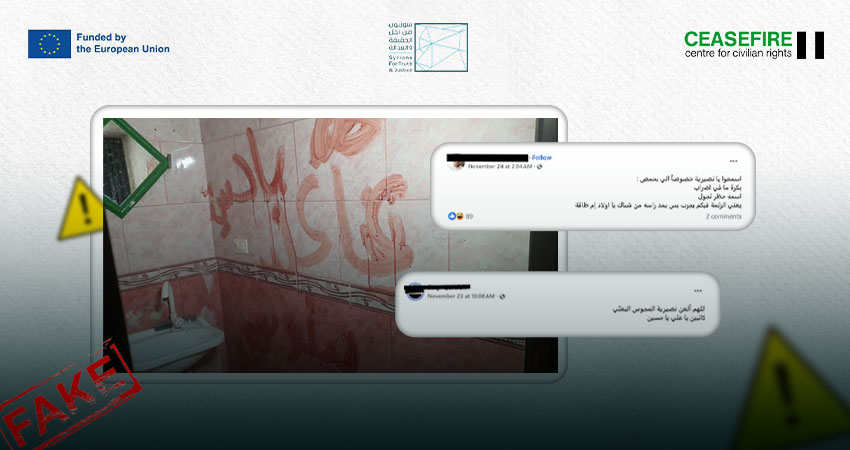
This report documents acts of violence of a sectarian nature that occurred in the city of Homs on 23 November 2025, following a brutal homicide in the town of Zaidal. Drawing on eyewitness testimonies from various neighbourhoods in Homs, this brief investigation illustrates how the violence was preceded by the widespread circulation of disinformation and sectarian hate speech, which contributed to the targeting of Alawite civilians in their homes and communities, despite their having no connection to the original crime.
The report further demonstrates that incitement and disinformation played a decisive role in transforming an isolated criminal incident —later found to have non-sectarian motives— into collective attacks that included indiscriminate gunfire, the smashing and burning of private property, and attempted raids on the homes of Alawite civilians. It also highlights witness accounts indicating the inability —or possible negligence— of security forces to contain the violence during its initial hours, which further escalated the scope and severity of the violations. The report recalls the responsibility of the transitional authorities to take effective preventive measures to protect civilians and vulnerable groups, and to counter disinformation and incitement, so as to prevent the recurrence of violence that undermines social peace.
For the purposes of this report, Syrians for Truth and Justice (STJ) conducted seven in-depth interviews with witnesses from areas targeted by armed individuals. Six interviews were documented during the attacks, while one was conducted several days later. Informed consent was obtained from all participants after clarifying the voluntary nature of their participation and the ways in which the information they provided would be used, including the incorporation of excerpts from their testimonies in this report. All witnesses expressed their wish to conceal their identities and any details that could lead to their identification, for fear of reprisals against themselves or their families. Accordingly, the report uses pseudonyms when referring to individuals whose testimonies are cited.