
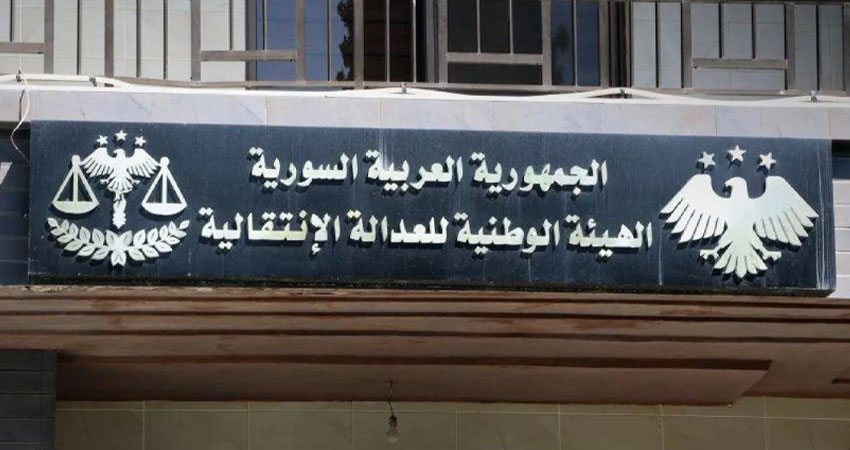
Syrians for Truth and Justice (STJ), represented by colleague Fayza Yousef, participated in a consultative session organized by the Reparations Directorate of Syria’s National Commission for Transitional Justice (NCTJ) at the Cultural Center in Damascus in late September 2026. The session focused on developing a national victims’ registry and brought together representatives of civil society organizations and victims’ associations.
The session opened with an introduction to the NCTJ and its tracks: truth-seeking, accountability, reparations, guarantees of non-recurrence, and memorialization. Organizers explained that reparations should not be viewed as humanitarian assistance or charity but as a process that recognizes victims’ rights and addresses the physical, psychological, economic, and social harm they have suffered. The session also outlined plans to establish reparations centers across the governorates to help victims access services. A recovery center in Homs is scheduled to open next month, while centers in Damascus and its countryside are expected to open before the end of the year.
Participants also discussed the Reparations Fund’s resources, including funds and assets that may be recovered from those responsible for violations, and emphasized the need for clear, transparent criteria for distributing resources and ensuring fairness among victims. Questions were also raised about property-related issues and ongoing transactions involving some residents’ properties in the Damascus countryside, and about whether transitional justice and reparations processes would address these cases.
The session reviewed the process for preparing the registry study, which included direct consultations with victims and their families through more than 300 field visits and meetings across 11 governorates. The registry defines a victim as anyone who has suffered individual or collective physical, psychological, economic, or social harm as a result of a serious violation within the NCTJ’s legal and temporal mandate. It may include immediate family members and dependents. The registry does not cover all cases of death or harm, such as natural deaths and certain civilian incidents unrelated to the conflict.
Given the specificity of the Syrian context, the loss of documentation, and the difficulty of accessing witnesses, the session emphasized the need for a system based on multiple, corroborating sources of information, including testimonies, medical reports, detention records, and digital evidence, rather than strict judicial standards of proof. The session presented three levels of reliability: strong, moderate, and preliminary, all subject to review. The framework is based on principles including the presumption of protection for victims, the separation of registration from entitlement, and the avoidance of re-traumatization, along with a sensitive approach to specific cases, including enforced disappearances, survivors of sexual violence, victims of chemical weapons, and those subjected to forced displacement.
Participants discussed several challenges, including multiple databases, inconsistent documentation methods, protecting sensitive data, the risks of discrimination and politicization, and the need for appropriate technical infrastructure and specialized personnel. At the end of the session, participants split into working groups to develop proposals and recommendations to improve the registry, registration, and verification mechanisms, as well as measures to protect victims and their information.
STJ stresses that the registry’s success depends on the meaningful participation of victims, their associations, and civil society at every stage of its development, as well as on strict data-protection safeguards and flexible evidentiary standards that ensure the most vulnerable groups are not excluded. The organization reiterates its readiness to cooperate with the NCTJ and to contribute its expertise in documentation and verification to advance and protect victims’ rights.