
Mohammad Al-Jaseem
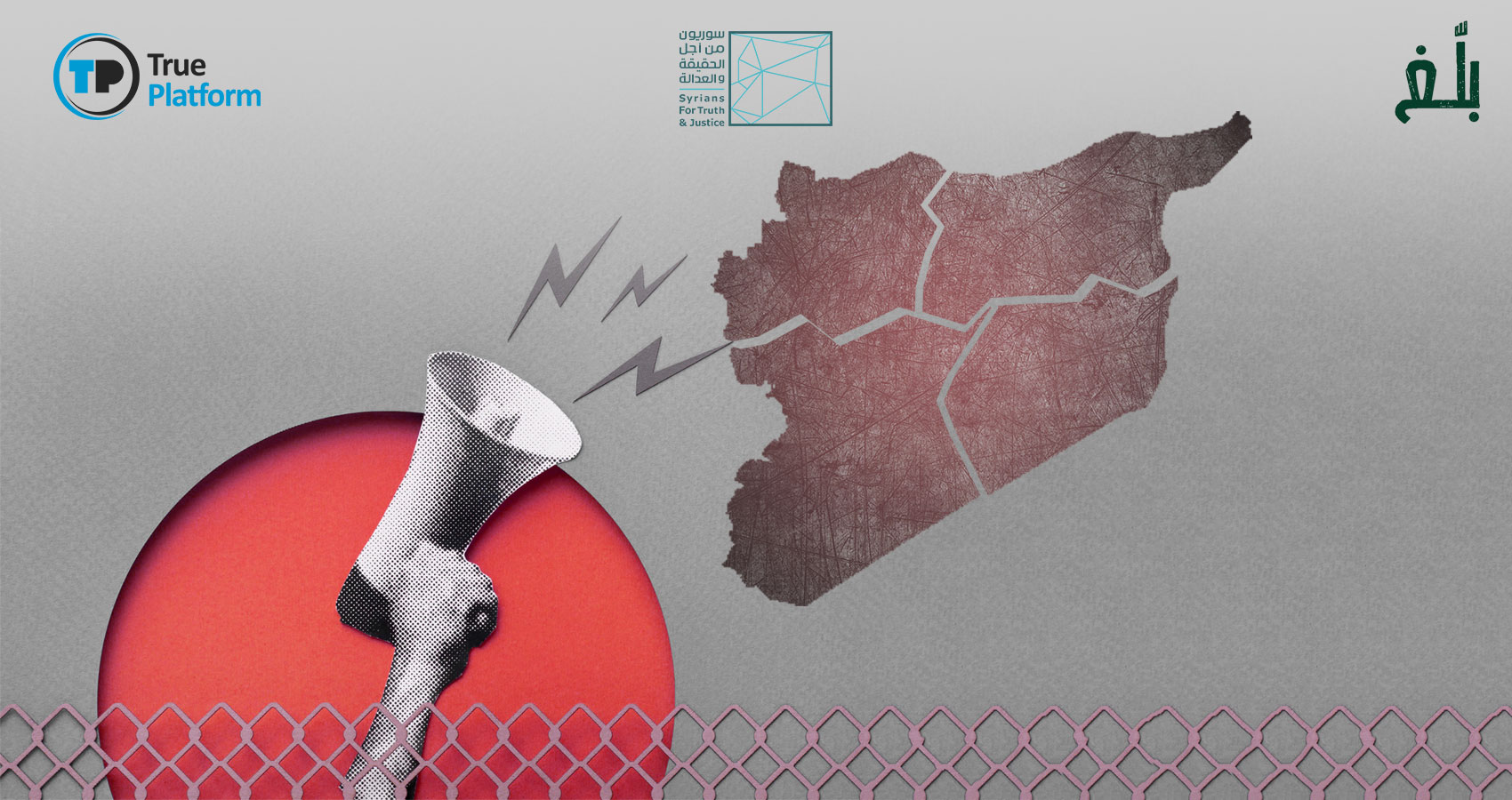
The harsh expressions that have come to permeate the Syrian public sphere in recent years, such as “kill,” “burn,” “exterminate,” “ISIS,” “traitors,” “remnants,” and “separatists”, are no longer just words spoken in moments of anger. Instead, they have become a core part of a discursive framework that reshapes relationships among Syrians and defines the boundaries of inclusion and hostility within the society. Here, words are not fleeting sounds but tools used to alter collective consciousness and turn political, religious, or regional differences into existential conflicts.
With the fall of the dictatorial regime, the country experienced a significant power vacuum in the symbolic realm, abruptly shifting from a single, tightly controlled discourse by state agencies to a chaotic mixture of competing narratives. Every individual gained the ability to create an opinion, spread hatred, or produce a harmful story that generalizes an isolated event to an entire group. This chaos was not just temporary; it evolved into a phenomenon of its own, generated from the ground up through brief posts, sharp satire, and video clips spreading in an unregulated space.
The Balgh Violence and Hate Speech Combat Initiative documented over three months (from July to September 2025) more than 250 reports,[1] showing how hateful narratives are created by demonizing entire groups, stripping away their humanity, and framing them as an existential threat. The issue is not just the direct insults themselves but the stories built around them. These stories transform the other person from a political rival into an “essential enemy” and portray them in ways that promote their exclusion or justify violence against them.
From this perspective, the current article aims to analyze how hateful narratives are created in the Syrian context: how they begin with a single word or a joke; how an entire group is reduced to a single characteristic; how an isolated incident is transformed into an existential threat; and finally, how elites adopt this discourse and give it symbolic legitimacy.
-
Framing a Definition of Hate Speech
First, distinguishing hate speech from other forms of discourse is essential, given the widespread confusion on this issue. Hate speech is neither a simple insult directed at an individual nor merely an emotional outburst; it is a framework for understanding and framing the other. It can be defined as “a form of communication produced and reproduced within intersecting contexts, aimed at dehumanizing a targeted group, excluding it, or portraying it as a threat, drawing on the social, linguistic, and technical structures of communication platforms. Through repetition and circulation, it contributes to the formation of hostile publics or counter-publics.” Accordingly, discourse is not simply a collection of words but a communicative system composed of:[2]
- Actors (individuals, groups, and authorities) who produce the discourse;
- The technical infrastructure that enables its amplification (algorithms and modes of interaction);
- The social and political context that grants it meaning and the capacity to influence and spread;
- The function it performs (exclusion, demonization, hostile mobilization, or the justification of violence).
From this perspective, hate speech functions as a communicative system that reshapes the public sphere, targeting groups defined by attributes such as religion, sect, ethnicity, gender, nationality, or other inherent or ascribed characteristics.
The rise of hate speech is usually linked to a complex mix of factors, which discourse studies often identify as seven primary triggers: political polarization; economic crises; populist rhetoric; technology and social media; major events like terrorist attacks; and religious and ethnic tensions.[3] Ironically, all these factors have come together in the Syrian case, resembling a room filled with highly flammable materials that only needs a tiny spark to set off an explosion.
-
Mechanisms for Producing Hate Speech and Hateful Narratives in the Syrian Context
Hateful narratives do not arise by chance; they are constructed through a series of social, psychological, and media-driven processes that transform a brief comment into the foundation of an entire “interpretive frame” through which collective understanding is reshaped. As these processes accumulate, sectarian, religious, ethnic, or regional differences are transformed into existential confrontations between groups, rather than disagreements that can be debated or managed.
You May Read and Download the Full Report in PDF Format, by Clicking Here.
[1] The Balgh Violence and Hate Speech Combat Initiative: A volunteer effort established in 2025 to address the rise of hate speech and the normalization of violence following the fall of the Syrian dictatorship. Balgh brings together Syrian researchers, activists, and professionals by utilizing legal accountability, an AI-based language model in the Syrian dialect to monitor incitement, and awareness campaigns/media productions that deconstruct violent narratives and promote citizenship. The initiative seeks to reshape public discourse and create a safer, more inclusive communicative space.
[2] Niklas Barth et al., ‘Contextures of Hate: Towards a Systems Theory of Hate Communication on Social Media Platforms’, The Communication Review 26, no. 3 (2023): 209–52, https://doi.org/10.1080/10714421.2023.2208513.
[3] Negi Advocate and Dr Chitranjali, ‘The Rise of Hate Speech Around the World’, SSRN Scholarly Paper no. 4719266 (Social Science Research Network, 7 February 2024), https://doi.org/10.2139/ssrn.4719266.